
How Body Camera Footage Affects Criminal Cases in Bergen County, NJ
Why Body Cameras Are Now Standard in Bergen County, NJ Arrests
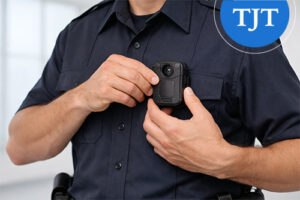 Body cameras are routine in New Jersey, and in Bergen County in particular. Many officers now have cameras that can record traffic stops, street encounters, searches, arrests, and just about everything else about a public encounter. That kind of evidence provides a record that was not available in the same way when officers made stops 20 years ago.
Police reports are written after an incident and are based on an officer’s memory and perspective of what happened. Body camera footage may capture the event in real time, including the words used by the officer and suspect, what was exchanged, the sequence of events, and the surrounding circumstances — the kind of details that can matter to the defense.
Body-camera video is also different from other forms of video evidence. A dashboard camera is usually fixed in front of a patrol vehicle, and surveillance cameras may capture an event from a nearby business, residence, or public place. Being on the ground, a body-worn camera can give a better view of a stop, search, or use of force.
That doesn’t mean the footage necessarily tells the whole story, though. The camera may be turned on late, covered by clothing or another person, pointed away from an important event, or may miss what happened before the officer arrived. Even so, body camera footage can be a crucial piece of evidence in determining whether the police account aligns with what the video actually shows.
How Body Camera Footage Can Help Your NJ Criminal Defense
Body-camera footage sometimes provides evidence that supports the defense by showing what actually happened during a police encounter. Because the recording may capture things in real time, it can be compared against police reports, other evidence, and officer testimony.
For example, footage might raise questions about whether officers had legal justification for stopping or detaining someone in the first place. It may show that the facts described later in a written report don’t match what can be seen or heard on the recording. Even small inconsistencies may matter when the legality of a stop, search, or arrest hinges on the officer’s observations.
The video can also show how police questioned a suspect. If officers used coercive tactics, continued questioning after a person invoked certain rights, or made statements that conflict with the official account of the interrogation, the footage could be relevant in court.
In DWI cases in particular, body camera footage may be needed when reviewing field sobriety tests. Video can show poor lighting, uneven pavement, weather conditions, traffic, footwear, physical limitations, or unclear instructions that aren’t reflected in the police report.
Body camera footage can also matter in search cases. If a person claims they voluntarily consented to a search, the recording may help establish whether the police recorded that consent, what was said, and whether the circumstances match the officer’s interpretation of events. The video doesn’t automatically favor the defense — but when the footage conflicts with the written record or fails to cover something that was glossed over, it can be a significant part of contesting the prosecution’s narrative.
When Body Camera Footage Can Work Against a Defendant
Body camera footage isn’t always favorable to the defendant. The same recording that may reflect flaws in a police report can help the prosecution’s case by confirming what an officer says happened during the encounter.
For instance, the video can support an officer’s description of the stop, arrest, and search. It can show that the defendant made admissions, offered explanations that later become important, or made spontaneous statements before or after formal questioning. In such cases, those statements could become part of the evidence used by the prosecution.
Video in DWI cases might also record signs that officers associate with impairment, like trouble balancing, slurred speech, confusion, or difficulty following instructions — relevant to proof of intoxication. In other cases, the camera might capture drugs, weapons, or other contraband that officers say was easily visible.
This is why body-camera evidence needs to be reviewed carefully and in context. A brief clip can look damaging until you consider the events before and after it, while footage that initially appears neutral may end up supporting an important part of the State’s case. Early review allows a defense attorney to identify both helpful and harmful portions of the recording before making strategic decisions on how to respond to the evidence.
How to Obtain Body Camera Footage Through NJ Discovery
Body camera footage can be part of the discovery in a New Jersey criminal case. Footage related to the stop, investigation, search, arrest, or other events connected to the charges can be obtained by the defense from the State.
Timing can matter. Body camera records are kept under retention policies, and video recordings aren’t preserved forever. If there’s potentially significant footage relevant to the defense, an attorney may need to identify it and request that it be preserved before it’s lost through routine evidence-management procedures. If several officers responded to the scene, each may have been wearing a body camera, and those recordings can capture different angles, conversations, or portions of the incident.
Obtaining and reviewing all relevant footage allows the defense to compare the recordings with police reports, witness accounts, and other evidence. That review may reveal inconsistencies, provide additional context, or confirm portions of the State’s version of events. For that reason, identifying available body-camera footage is an important part of the discovery process.
Common Problems With Body Camera Footage in Bergen County Cases
Body camera footage is not always complete or clear. One common issue is that an officer doesn’t activate the camera until after an encounter has already started. When that happens, the recording can capture the arrest or search but not the events that led officers to stop or approach the person in the first place.
Recordings can also have gaps in the audio or video. A camera may turn off temporarily, the microphone may fail to pick up conversations clearly, and parts of an encounter can simply be missing.
Video quality can be a problem too. Darkness, movement, distance from the camera, clothing, or the officer’s position can obscure what’s happening and make it difficult to determine what actually occurred. In other cases, an officer may not activate the body camera at all.
Missing footage doesn’t necessarily invalidate an arrest or criminal charge, but the defense may have to contend with it at trial — especially when the absence of footage could have documented a disputed encounter.
An attorney can examine when the camera was activated, whether portions of the recording are missing, and how the available footage compares with the officer’s report and other evidence. When expected recordings are incomplete or don’t exist, the circumstances surrounding that missing evidence can become another point for the defense to raise.
How a Bergen County Criminal Defense Attorney Uses Body Camera Evidence
 Body camera footage from police and witnesses is used as part of a wider investigation of the evidence in a case by a New Jersey criminal defense attorney. In some cases, the footage may need to be examined more closely, and an attorney may seek independent verification if there are audio quality, timing, or other technical issues that aren’t obvious from a simple review.
What the footage shows can affect the direction of the defense. It may support filing a motion to suppress evidence, make plea negotiations more likely, or factor into the decision to go to trial. It may also reveal weaknesses in a defense theory that need to be addressed early rather than later in the case.
If you’re facing criminal charges in Bergen County or elsewhere in New Jersey, getting the body camera evidence collected as early as possible is an important part of deciding how to move forward. Learn more about what to expect at each point in the process on our stages of a criminal case page.
Frequently Asked Questions About Body Camera Evidence in NJ Criminal Cases
Can I get a copy of the body camera footage in my case?
Yes. Body camera footage related to your stop, search, or arrest is typically obtainable through discovery in your criminal case.
Does missing footage automatically help my case?
Not automatically, but missing or incomplete footage can be raised as an issue at trial, especially when it could have documented a disputed part of the encounter.
Can body camera footage be used against me?
Yes. If the footage supports the officer’s account, shows signs associated with impairment, or captures admissions, it can become part of the evidence used by the prosecution.
How long is body camera footage kept?
Retention periods vary, and footage isn’t preserved indefinitely, so it should be identified and requested early to avoid losing potentially important evidence.
Talk to a Bergen County Criminal Defense Attorney
If you have criminal charges in Bergen County or elsewhere in New Jersey and body camera footage may be part of the evidence, the attorneys at The Tormey Law Firm have handled hundreds of cases like these and can help you understand what the footage shows. Contact our Hackensack office today at 201-330-4979 for a free consultation. We’re located at 254 State St, Hackensack, NJ 07601, and available 24/7.